Greetings, those of good will.

I've created this blog to register my experience through this PhD in London, UK. Welcome to a space for discussion of new ideas within digital interfaces, eye tracking, assistive technology, natural user interfaces, physical and tangible computing, gestural interfaces, upcoming devices, web 2/3.0, augmented reality and beyond.
Showing posts with label Interaction Lab. Show all posts

Friday, 12 August 2011

Focus Group on Web App for Universities

I was invited this Friday to help my friend Raj Arjan (Interaction Lab Manager) to facilitate a focus group about a Web App for Universities. Took pictures, repositioned the cameras as the process went forward, as well.

Based on student and academic needs, the University has decided that they will provide full access to the information on smart phones and tablet computers. The web site will be turned into a web application that will bring students, employees, and alumni closer together. The new solution will allow everyone access to the information from everywhere without being tied to a desktop or laptop computer.

The focus group was guided through the following steps:

1. Present the video
2. Present the power point presentation
3. Talk briefly about affinity diagramming after the presentation

Then start the group work.

Object clustering task:
Use full white board for this. Produce a list of objects. Put all on the
white board immediately. When they run out of objects, start the
categorisation og them. Objects are yellow, categories are orange, 20
mins. Take a picture at the end of the whiteboard.

Subject clustering task:
Split the white board in two sides: Allowed and Disallowed. Produce a list
of subjects. For each identified subject, categorise the identified
objects on either the Allowed or Disallowed sides of the whiteboard. Take
picture of the whiteboard when they start on a new subject.

Context clustering task:
Split in the white board in two sides: Allowed and Disallowed. Make a list
of contexts. Choose one context and one subject (a context-subject pair).
Put the objects on the Allowed or Disallowed side. Take picture of the
whiteboard when they start on a new context-subject pair.

Friday, 5 August 2011

New gadgets at the Interaction Lab!

Raj Arjan, my friend and Interaction Lab manager purchased more equipment that will allow more research and interdisciplinary research:

1. Mind control two devices (emotiv and mindwave) mindwave is mac compatible

2. X60 now can track gaming
Still no app for mac besides the sdk
Stand to track mobile and ipad

3. Mini wearable camera, non intrusive

4. Nvidia 3d glasses

5. Galvanic skin response for temperature, motion, skin condutivity - stress levels
UT of gesture based interactions

6. 2 iPad2 tablet computers

7. Didital pad Acecad, handwriting notes being digitalized and drawings/scribbles

8. Panasonic IP camera, remote controlled, controlled by browser

9. Gaming console: nintendo Wii (controller hacks) and x-box360 with kinect (for geatural interaction)

10. Dell laptop to run Tobii eyetracker so we could analyze

Thursday, 5 May 2011

Second batch for my article: Drag and Drop Affordances within Personal Web Portals

Second batch took places, learning properly how to conduct properly an eyetracking UT and analyze the results. Some pictures below:


Wednesday, 27 April 2011

My article: Drag and Drop Affordances within Personal Web Portals

Started my first batch, analyzing iGoogle and My Yahoo! with 5 people. Below, some heatmap results with My Yahoo!:

Tuesday, 1 March 2011

Jacques Chueke talk at City University London: Beyond Mouse & Keyboard: from Desktop Metaphor towards Natural User Interfaces

Great, Raj invited me to talk at the City University HCID Open Day:

Ticket Information

Type Remaining Ends Quantity
City University HCID Open Day: Beyond Mouse & Keyboard: from Desktop Metaphor towards Natural User Interfaces - Jacques Chueke (HCID) 20 tickets Apr 19, 2011 Free  
Event Details
City University HCID Open Day: Beyond Mouse & Keyboard: from Desktop Metaphor towards Natural User Interfaces - Jacques Chueke (HCID)
This presentation investigates new forms of interaction within digital interfaces. It examines the assumption that advances in embodied interaction and natural user interface (NUI) computing will improve and enhance the field of user-machine interface, bringing features to users that allow a more direct and natural manipulation of digital interfaces and devices (e.g. eye tracking, touch and multi-touch screen, voice and gesture recognition). I will address a set of topics that are more foundational than technical: the investigation on the evolution of digital interfaces will be detailed through the designer & user experience point of view, stressing different aspects and features of operational systems (OS): from Command-Line Interface (CLI), to Graphic-User Interface (GUI), towards Natural-User Interface (NUI), which encompasses Tangible- User Interface (TUI).

Some thoughts and updates about conferences...

Managed to accomplish all feasible deadlines for this year conferences. Let's hope I'll get a place on them...
 
1. ACM SIGCHI Symposium on Engineering Interactive Computing Systems
http://eics-conference.org/2011/index.php?content=1
From: June 13-16, 2011
Short Paper: February 10, 2011 Title: Interface Behaviour of 2.0 & 3.0 Websites: iGoogle Usability Evaluation with Eye Tracking (SENT)
Final decision notification: March 17, 2011, 23:59 PST
Doctoral Consortium: February 10, 2011 title: Investigating TUI and NUI Technologies: Bringing Improvements to the Visual Feedback and User Experience (SENT)
Review notification: March 17, 2011, 23:59 PST
Where: Pisa, Italy.

2. INTERACT 2011: 13th IFIP TC13 Conference on Human-Computer Interaction
http://interact2011.org/
From: 05 to 09 September 2011
Full Paper: January 24th, 2011 Title: Beyond Mouse & Keyboard: from Desktop Metaphor towards Natural User Interfaces (SENT)
Acceptance notification: 28 March 2011
Where: Lisbon, Portugal.

3. HCI2011 – is Health, Wealth & Happiness. 25th BCS Conference on Human Computer Interaction
http://hci2011.co.uk/site/
From: 4th to 8th July, 2011
Short papers/posters/work in progress (6 pages max): 18 February 2011 Title: Interface Behaviour of 2.0 Websites: Affordances within Personal Web Portals (SENT)
Notification: 8th April 2011
Where: Newcastle-upon-Tyne, UK.

Thinking of re-naming my thesis with the following title (that came from you George...): TUI and NUI: EXPERIMENTATION WITH RESPONSIVE VISUAL FEEDBACK FOR NEW AND UNLEARNED INTERACTIONS.

Thursday, 24 February 2011

Brazilian visitors: SEMS & SoI News

Brazilian visitors
Students and staff from the Industrial Design and Arts Department of Pontifícia Universidade Católica do Rio de Janeiro visited the Interaction Lab in February. The tour was arranged by Jacques Chueke. The visitors were welcomed by Professor Neil Maiden and given demonstrations by Raj Arjan and Meirion Williams.

Schools News
Ken Grattan
Welcome to the first newsletter of 2011.

We began the year with Graduation ceremonies for both Schools, which gave us the opportunity to celebrate the achievements of our newest alumni.

The Schools' student speakers, Natasha Eversley-Robertson and Ayesha Ansari, typified the success of many of the graduands present, having worked hard at City and during placements, to secure excellent graduate roles.

They took the opportunity to thank the staff, both academic and professional, who helped them on their journey – a sentiment that I would like to echo here.

A key development since the start of the year has been the launch of the Consultation on
the 2016 Vision for the University
.

We held a productive Schools-wide staff meeting on Wednesday 16 February to introduce the Vision, which focuses on our academic excellence, links with business and the professions, and London location.

I encourage all colleagues who have not already done so, to read the Vision in full and offer their feedback through the dedicated Consultation website.

With best regards,

Professor Ken Grattan

Health Informatics
City calls for Open Health Informatics

The Centre for Health Informatics has launched a research programme and policy challenge paper to explore how NHS IT services can be improved and made more cost-effective.

Coming at a time of critical change for the NHS, it proposes a new combination of open standards, open source software, open systems interfaces and agile development.
F1 in Schools
F1 in Schools revs up at City

On Tuesday 8 February, City played host to the London and South East England heat of F1 in Schools – an annual educational challenge that sees 14 million young people
aged nine to 19 from 36 countries work in teams to design, build, test and race miniature Formula 1 cars.
Scholarships to study undergraduate courses in SEMS and SoI are offered to the winning World Champions.

Smile for London
City postgraduate cheers up Londoners with underground art campaign

Jo Kotas, a part-time Masters in Innovation, Creativity and Leadership (MICL) student, co-founded Smile for London – an initiative that aimed to brighten the London commute.

The campaign beat the January blues with a showcase of film, art and animation, displayed on digital platform screens in underground stations during the rush hour.
ISTAT Scholarship

Aircraft Maintenance Management postgraduate wins international scholarship

Dinindu Sanjana Ranatunga, an MSc in Aircraft Maintenance Management student, has received a prestigious scholarship worth $10,000 from the International Society of Transport Aircraft Trading (ISTAT) Foundation.

It is the second year in succession that a City student has received the prize.
Security research developments

A Research Half Day on Security took place in late December, drawing on work across both SEMS and SoI, as well the School of Social Sciences and The City Law School. The aim was to create a City Network on Systems Security, to increase the critical mass required
for research initiatives in this interdisciplinary area.

Brazilian visitors

Students and staff from the Industrial Design and Arts Department of Pontifícia Universidade Católica do Rio de Janeiro visited the Interaction Lab in February. The tour was arranged by Jacques Chueke. The visitors were welcomed by Professor Neil Maiden and given demonstrations by Raj Arjan and
Meirion Williams.

PLU expansion

The Professional Liaison Unit (PLU) has expanded with the addition of two new staff members.

Alex Elkins has been appointed as the PLU Manager. He will be managing and supporting the team through their increasing activities across SEMS and SoI. Alex initially trained as an industrial chemist and spent several years at GlaxoSmithKline before moving
into higher education. Alex comes from the London School of Economics (LSE) where he was Postgraduate Internship Coordinator.

Laura Blatchford has joined as a Work-based Learning Advisor. She will be increasing the number of opportunities for students to undertake work placements across both Schools. Laura has been involved in the field since 2003 and moved to City from the University
of Exeter, where she was a Work Placement Coordinator for the College of Engineering, Mathematics and Physical Sciences.

New training options

The Learning Development Centre is inviting new members of staff to take part in its Learning Teaching and Assessment Introductory Certificate session on 16 - 17 March and 4 - 5 May 2011. Please contact Tom Sanderson for details.

Staff News

Sujatha Alexander has graduated with an MSc in Human Resource Management and Organisational Analysis from King's College London. Sujatha completed her Masters part-time, whilst continuing to work full-time in the SEMS courses office.

Dr Eduardo Alonso has been promoted to Reader in Computing. He was also one of two Editors of the recently-published Computational Neuroscience for Advancing Artificial Intelligence: Models, Methods and Applications.

Professor Robin Bloomfield has been appointed as Associate Editor-in-Chief of IEEE Security & Privacy magazine. He has also joined the Government's new Engineering and Interdependency Expert Group. This will be chaired by the Department for Business, Innovation and Skills' Chief Scientific Adviser, and will assess the resilience of national infrastructure and develop a roadmap for its future development.

In addition, Robin and Professors Bev Littlewood and Lorenzo Strigini have been contracted to advise the US Nuclear Regulatory Commission and  Brookhaven National Laboratory

on methods for quantitative evaluation of software reliability for nuclear reactor protection systems.

Professor John Carlton will formally take office as the 109th President of the Institute of Marine Engineering, Science & Technology (IMarEST) at the organisation's annual general meeting in March.

Jagdeep Dosanjh has moved to the SoI courses office from SEMS.

Professor Panicos Kyriacou delivered a popular talk on optical sensing in medicine in February as part of the Institute of Physics' lecture Series at the University of Hertfordshire.

Dr Christos Kloukinas has been promoted to Senior Lecturer in the Department of Computing.

Richard Leach has been appointed as Technical Services Manager in SEMS. He will take up the post at the end of March, coming from Reading College, part of Thames Valley University.

Dr Raj Muttukrishnan and Stephanie Wilson have both recieved Pathways to Impact funding from the Engineering & Physical Sciences Research Council (EPSRC). Raj received £10k to
develop a prototype for establishing identity in the electronic world, particularly in relation to mobile banking in India. Stephanie gained £15k to develop prototype software based on the GHandI project, which is helping the clinical handover process at Great Ormond
Street Hospital.

Dr Justin Phillips has been awarded a £45k grant from the National Institute for Academic Anaesthesia
for a joint project with Dr Peter Shortland, a neuroscientist at the Blizard Institute of Cell
and Molecular Science
. They will use optical sensors to investigate the mechanism of specific types of spinal cord injury.

Dr Keith Pullen has been promoted to Professor in Energy Systems.


Saturday, 19 February 2011

Students from PUC-Rio, Rio de Janeiro – Brazil visited the Interaction Lab


A group of 14 students and two professors from Industrial Design, Arts & Design Department from PUC-Rio (Pontifícia Universidade Católica do Rio de Janeiro) visited the Interaction Lab on February 17th. Neil Maiden, the Head of Centre, Professor of Systems Engineering and Deputy Dean of School of Informatics facilitated the visit and welcomed the students.
Jacques Chueke (M.Sc.), one of our PhD Researchers organized the visit. He was contacted by the prof. Amador Perez (design and illustration) and prof. Elizabeth Grandmasson (project design coordinator) who are guiding this group visit through the best arts & design museums in London and Paris. Amador Perez was Jacques’ teacher and they are now friends and colleagues at PUC-Rio, where Jacques teaches about digital image (undergraduate) and usability in the webdesign lato sensu.
Amador Perez and Jacques Chueke at Interaction Lab. Picture: Meirion Williams
Rajiv Arjan, the Interaction Lab manager presented the MS Surface touch-table and the Eye Tracking equipment available at the lab, explaining the importance and impact of eye tracking studies for user testing (UT) and usability evaluation, aiming on the improvement of user experience (UX). The equipment, as explained, can be used for websites, static images, video and all sorts of applications and is being utilized for professional consulting for different clients (e.g. Vodafone, The Royal Opera House) in addition to academic purposes.
Amador Perez during an eye tracking testing and Rajiv Arjan. Picture: Jacques Chueke
Meirion Williams (researcher of new technologies for interaction), gladly presented studies and investigation over MS Kinect camera as a novel form of input, his personal project – the Mezatop (a table top surface device, which offers similar interaction as observed on MS Surface), pods (with projectors within), Wii-motes (paired with IR pens) and the eBeam (ultra-sound equipment that facilitates group interaction and teaching allowing for digital handwriting over any image, website or desktop software).
Meirion Williams (on the back) explaining to Amador Perez how to use MS Kinect as an input form. Picture: Jacques Chueke
 Students from Arts & Design, PUc-Rio, experiencing interaction with MS Kinect. Picture: Jacques Chueke
This visit was a great success and can result in possibilities for students exchange in the future.
Again thank you Raj and Meirion, for the great presentation and interest on explaining the equipment, research and development being carried on the HCI Design Centre, City University London.

Wednesday, 16 February 2011

Explaining the Eye Tracking x50 during the Open Evening at the Interaction Lab

I was invited by Raj Arjan, the IL Lab manager to present the x50 Eye Tracking system during the Open Evening at the Interaction Lab, Centre for HCI Design. Great pleasure to present the importance of Eye Tracking studies for UTs and further improvement on UX. Some pictures below.


Friday, 11 February 2011

Evan Grant from Seeper

Through my 1st supervisor, George Buchanan I was able to meet today the founder of a collective called Seeper, company that creates interactive digital installations. Evan Grant is founder of collective seeper. He started the company during his first year of study at Bournemouth University and has been working for the past 10 years as a director, developer and producer with a self-applied remit for innovation led wonderment.
Exploring natural user interaction and ubiquitous computing to create multi-sensorial experiences and memories. 2008 has seen Evan working with the likes of Sony PlayStation, Glastonbury Festival, Unilever and Aldeburgh Music.

BBC
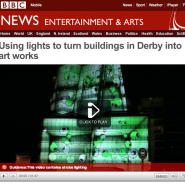
We had the honour of a feature spot on the BBC. Appearing on Breakfast and evening news, alongside newsnight, newsround and the BBC online homepage! We became the most watched video of the day! Read More
IMG_5491_1080
The birth place of Volkswagen. As a classic VW geek how could I resist. That reminds me, here's my long lost love :( Read More

IMG_5181_sm
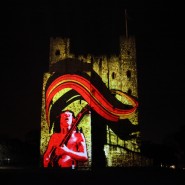
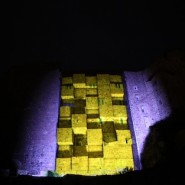
ACDC Vs Iron Man 2 - Architectural Projection Mapping on Rochester Castle
My latest project, working with the team to projection map Rochester castle for ACDC Vs Iron Man!

Read More
TEDActive_Talk1
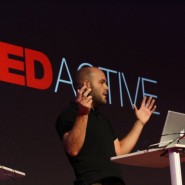
I had the pleasure of being invited to talk and exhibit at TED in Palm Springs last week. Here's some new coverage: Read More
sm_yellcubes
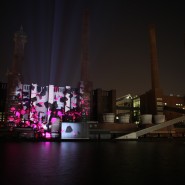
Check out my latest venture into the world of 3D architectural projection mapping!

Read More
IMG_7035_470px
Take a look at some of our latest work at TENT Digital as part of London Digital Week.

Read More
pic_StandingWave_Desc_sm
We've just launched the new Cymatics Community website!
www.cymatics.co.uk

Read More
Credit: TED / James Duncan Davidson
First let me apologise for being the slowest blogger in history. 8 months between posts, shocking! Ableit to say I've been super busy doing all sorts of crazy, wonderful things. One of which being last week's TED Global conference in ...Read More
InteractiveSphere_TENT_sm
My company seeper have been commisioned by Dezeen architecture and design magazine and Tent Digital to exhibit our latest at London Digital Week Read More
3341977074_dee16a2dfd
Last week I worked as curator of installations at the Future Cinema Watchmen party/screening. My company seeper created (among other things) a multi touch, sound and lighting installation using the holographic delights of Musion.
Read More

Sunday, 21 November 2010

From Mozilla Labs: I participated on Design Jam London 1

Design Jam London 1


Design Jam London
50 people. 9 hours. 1 design challenge.
The first Design Jam, supported by Mozilla Labs, took place in London on Saturday, 20th of November, at City University London.

Design Jams are one or two day design sessions, during which people team up to solve engaging UX challenges. While conferences and talks are very popular in the UX community, we don’t have many events for actual collaboration, like the ‘hackdays’ enjoyed by the development community. Only a few UX designers participate in hackdays or open-source design initiatives – how can we change this and get UX designers more involved? How can we introduce them to open collaboration formats? The idea of an event to get designers together to learn from each other while working on actual problems was born. Design Jams champion open-source thinking & sharing and are non-profit, run by local volunteers. The London team are Desigan Chinniah, Johanna Kolllmann, Joe Lanman and Franco Papeschi.
While the primary audience for Design Jams are UX designers, everybody who wants to learn with and from others about UX is welcome. The 50 people at Design Jam London were UX professionals, developers, visual designers and students, all with different levels of experience and skills.
Participants writing their cards and sticking it on the grid
The grid
The team grid
After forming groups facilitated by a ‘team grid’, 9 teams started tackling the design challenge. A Design Jam isn’t a competition, so all teams were given the same challenge, and encouraged to help each other, eg by grabbing a person from a different team for interviews or guerilla usability testing. Picking a suitable design problem was the hardest task for the organisers. Here it is:
What is the ideal interface to track and trace relevant online content?
Every day people consume megabytes of web content – on a myriad of internet-enabled devices from varying locations. This content is typically re-located through:
  • history
  • bookmarks
Some things to consider:
  • What are the typical cues for people to remember and retrieve online content (e.g. colour, keywords, prices, pictures, surrounding context etc.)?
  • What are the current pitfalls? Where do users have most problems?
  • How can people annotate visited content with additional information (e.g. mind-maps, tags, date/time visited, urls, search engine terms used, group around themes like going on holiday etc.)?
  • Can activity be clustered automatically (e.g. time, location, people etc.)?
  • Do 3rd party services (de.licio.us, Twitter & Flickr favourites, Facebook likes etc.) have a role in your idea? How do these interact with the rest of the service? Can previous saved content be connected or suggested?
  • How can this work on single or multiple devices?
  • How does location influence the interface?
  • How do you want to expose the service (built-in browser UI, add-on/extension, web-based tool, widget or app, etc.)
Teams started tackling the challenge with a Research & Explore phase. It was great to see the various different approaches, including several brainstorming techniques, guerilla interviews or twitter surveys.
Mindmapping ideas
Mindmapping ideas
Desk research
Desk research
Personas
Personas
At hackdays, the only time when outcomes are being shared is during the (often very short) presentations at the end of the day. At a Design Jam, the process is just as important as the outcome. How did you get this idea? How did you approach the problem? To allow teams to compare their processes and bounce ideas off each other, the groups shared what they had done so far before lunch. Articulating their ideas and getting questions from the audience helped teams to focus, and seeing how other teams had taken completely different steps got everybody reflecting on the many different ways to explore a problem.
“Seeing what the other teams had been doing made us see our idea differently and helped us focus” – Jeff van Campen
Lunchtime show & tell
Show & tell
One of the interim presentations
After collecting tons of insights and coming up with some great concepts, the rest of the day was dedicated to the Design phase. The biggest challenge for the teams was to decide which aspect of their idea they wanted to focus on. Personas, guerilla research, sketching and storyboarding helped to prioritise and refine the design concepts. Design Jam mentors Leisa Reichelt and Ivanka Majic helped teams to make decisions and start visualising by looking at the concepts from a different perspective, asking the right challenging questions, and offering Jelly beans.
Leisa, conversations with the teams
Leisa chats with a team
Ivanka, conversations with the teams
Ivanka helps a team
Working on the wireframes
Sketching out a flow
Wireframes
Wireframes
In their final presentations, each team shared what they had done during the design phase, and presented the concepts. Outcomes included personas and scenarios, sketches and paper prototypes, diagrams explaining what the service does, and flow charts explaining what users do. The teams also talked about their design process. It was interesting to hear about the different approaches to sketching, with teams using techniques like the ‘6 up’ template to have many ideas, or personas, storyboards and tools such as Stephen Anderson’s mental notes cards to have different ideas. It was also fascinating to see how people ‘winged’ the final presentations, using elevator pitches, iPad sketches and great stories to communicate the value proposition of their idea.
mindSTORM - final presentation
Bucket 9 - final presentation
Stachs - final presentation
You can find more information and see details about each team’s design process and outcome on the Design Jam wiki, check out the photos on Flickr, and videos of the day will be up on Vimeo.
What’s next?
The London Design Jam was a first attempt to try out this new format and understand the key aspects that will allow teams to collaborate, learn from each other, and walk away with a tangible design concept. Participant feedback and general interest confirmed that there’s definitely an appetite for this kind of event – an opportunity to share knowledge through creating and doing rather than talking. The aim is to have regular Design Jams in London, the UK, around the world, really. The London organisers are busy turning their learnings into a Design Jam organisers handbook, to make it easy to put on future sessions. If you’re interested in organising a Design Jam, add your name to the Design Jam wiki.
Thanks to Mozilla Labs, City University London, and Johnny Holland for supporting Design Jam.
Questions, suggestions, doubts? Thoughts on getting UXers to collaborate? Done something similar, and have advice? Share your thoughts.
—–
Header image under Creative Commons by E1
All photos by Design Jam London. The outcomes of Design Jam are shared under a Creative Commons license.

Related posts

____________________________________________________
Pictures about the project my group created, the OPTIMATES (which name I suggested). From my friend Mariana Mota, who wrote a great blog entry about our day together.


Link for the Design Jam London 1 Twiki (with reports from every group that participated, revealing details of each projects, with pictures of the group, sketches, drafts, etc.).
Have a look at the Mozilla labs article about it as well.

    Monday, 15 November 2010

    Tobii Eye Tracking system workhop

    Raj, the Interaction Lab manager was again very kind to guide me trough how to work with Tobii x50 Eye Tracking. I'm overwhelmed with the possibilities. One can assess user interaction with static images, websites and even video.
    The test as observed by the expert evaluator, presented below.  It records the ambient sound, creates a video of the subject's face (that could frame some face/body reaction that could be matched with the test results), displays the IR feedback reflex from the subject eyes, besides the eye gaze results in real time.


    It's a complete product, where you could set up an introduction screen with timer, keyboard or mouse shortcut toward the start of the task itself. It's possible to add a form at any point of the task as well, which is amazing (as can be seen below):


    It's possible as well to overlap results obtained with different users, in order to identify trends of observation. Below a print screen of different gazes from different users, generating a heatmap as well, besides a cluster view:

    Gaze view results: 4 users

    Heatmap results: 4 users

    Cluster results: 4 users


    I also generated a video from the Gaze results overlapped:


    To sum up, that was brilliant, I've been waiting to use this equipment for at least three years and for sure will be a great addition to my PhD research.