Greetings, those of good will.

I've created this blog to register my experience through this PhD in London, UK. Welcome to a space for discussion of new ideas within digital interfaces, eye tracking, assistive technology, natural user interfaces, physical and tangible computing, gestural interfaces, upcoming devices, web 2/3.0, augmented reality and beyond.

Wednesday, 16 February 2011

Explaining the Eye Tracking x50 during the Open Evening at the Interaction Lab

I was invited by Raj Arjan, the IL Lab manager to present the x50 Eye Tracking system during the Open Evening at the Interaction Lab, Centre for HCI Design. Great pleasure to present the importance of Eye Tracking studies for UTs and further improvement on UX. Some pictures below.


Friday, 11 February 2011

Evan Grant from Seeper

Through my 1st supervisor, George Buchanan I was able to meet today the founder of a collective called Seeper, company that creates interactive digital installations. Evan Grant is founder of collective seeper. He started the company during his first year of study at Bournemouth University and has been working for the past 10 years as a director, developer and producer with a self-applied remit for innovation led wonderment.
Exploring natural user interaction and ubiquitous computing to create multi-sensorial experiences and memories. 2008 has seen Evan working with the likes of Sony PlayStation, Glastonbury Festival, Unilever and Aldeburgh Music.

BBC
We had the honour of a feature spot on the BBC. Appearing on Breakfast and evening news, alongside newsnight, newsround and the BBC online homepage! We became the most watched video of the day! Read More
IMG_5491_1080
The birth place of Volkswagen. As a classic VW geek how could I resist. That reminds me, here's my long lost love :( Read More

IMG_5181_sm
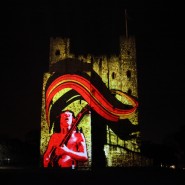
ACDC Vs Iron Man 2 - Architectural Projection Mapping on Rochester Castle
My latest project, working with the team to projection map Rochester castle for ACDC Vs Iron Man!

Read More
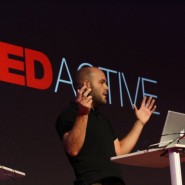
TEDActive_Talk1
I had the pleasure of being invited to talk and exhibit at TED in Palm Springs last week. Here's some new coverage: Read More
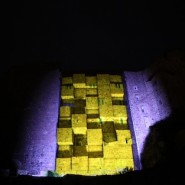
sm_yellcubes
Check out my latest venture into the world of 3D architectural projection mapping!

Read More
IMG_7035_470px
Take a look at some of our latest work at TENT Digital as part of London Digital Week.

Read More
pic_StandingWave_Desc_sm
We've just launched the new Cymatics Community website!
www.cymatics.co.uk

Read More
Credit: TED / James Duncan Davidson
First let me apologise for being the slowest blogger in history. 8 months between posts, shocking! Ableit to say I've been super busy doing all sorts of crazy, wonderful things. One of which being last week's TED Global conference in ...Read More
InteractiveSphere_TENT_sm
My company seeper have been commisioned by Dezeen architecture and design magazine and Tent Digital to exhibit our latest at London Digital Week Read More
3341977074_dee16a2dfd
Last week I worked as curator of installations at the Future Cinema Watchmen party/screening. My company seeper created (among other things) a multi touch, sound and lighting installation using the holographic delights of Musion.
Read More

The Creators Project: Is Eye Tracking The Next Step In Controller-Free Video Games?

Great contribution from my cousin Fábio, a follow up from the implementing creator James Powderly’s Eyewriter technology, originally intended to help give paralyzed graffiti legend Tempt1 the ability to create art again.
    by Dylan Schenker February 07, 2011
    It’s time to flex those eye muscles because you’ll be using them quite a bit to take down this alien invasion. Implementing creator James Powderly’s Eyewriter technology, originally intended to help give paralyzed graffiti legend Tempt1 the ability to create art again, Rui Pereira has created an eye tracking video game. In shootEm!, eyeballs with human finger appendages crawl across a 3D landscape towards the foreground of the screen. When the player focuses his or her eyes on the menacing creatures, lasers fire across the screen, vaporizing them into piles of pixel dust.
    This isn’t the first time the Eyewriter has been used in relation to video games, but it’s a better example of how the device can be used to create an immersive video game experience. Along with this demo, Pereira has also created a game called wordGaze that tracks the amount of time a user’s eyes focus on individual words while reading a passage.

    Since these games are only experiments, we’re excited to see how far this technology can be taken and what kind of games eye tracking could possibly give birth to, not to mention other educational or handicapable technologies. And since the Eyewriter is already open source, we hope more designers take this as a clarion call to research and develop applications. With the popularity of controller-free gaming tools like the Kinect, it’s worth speculating what the general interest would be for eye tracking games. We’ll be, ahem, keeping an eye out for any further developments.

    Friday, 4 February 2011

    Talk with George Buchanan on 04.02.2011

    Summary of what I discussed today with my 1st Supervisor at the 11am meeting:

    1. George asked me to mention the topic of interest within my literature review - we went through every book/article I've summarized.
    That resulted in some keywords/ideas that express topics of interest within my research: visual perception, cognitive psychology (attention, memory, learning), engaging with new interfaces, perception of the system, control,
    visual metaphor, symbology, emotion (side subject, affecting memory and learning), evaluation bridge (from unconscious to conscious levels) - execution bridge, GUI, TUI, NUI, EMBODIMENT, PHYSICALITY, AFFORDANCE,
    cognitive congruence x dissonance, sociology (side subject), ethnography (side subject), statistics (later).

    2. Have a better look on books/papers from:
    - Mark Weiser (The Invisible Interface)
    - Don Norman (The Invisible Computer)
    - Bill Buxton
    - Rolf Molich
    - Previous Physicality Proceedings/Workshops (I've read the 2009)

    3. TUI and NUI interactions are just serving to accessorise/act as an addictive to an already exceeded GUI interface.

    4. Heidegger concept for Embodiment: Causality + Time felt (reviewed by Dourish, one of my main references)

    5. Opportunity: George suggested and I'm very keen on an experiment like this: Designing a concept for Eye Gaze defined by tooltips. Visual feedback - reactive interface to gestures and gaze.
    Nearly touching (hovering hands over the screen/table) and eye dwelling will provoke response from the system - but no activation.
    The user exploits and 'near misses' interactions presented by the system - driving him towards learning (George: the interface signals opportunity for potential interaction).
    Key-point: The exploration takes place with gestures/eye gaze - the activation actually requires touch/conventional mouse. EXPLORING > ERROR > LEARNING. Should be very intuitive.
    That could be applied over the MS Surface or Meirion's Mezatop.
    George: EXPERIMENTATION WITH RESPONSIVE VISUAL FEEDBACK FOR NEW AND UNLEARNED INTERACTIONS. The interaction/context should be different from desktop.

    6. Investigate articles about MS Surface + cameras (e.g. Hrvote Benko in ACM).

    7. Prototyping: Few experiments could be created to explore the concepts above. Experiments could address HEALTH, DESKTOP, INSTALLATIONS, GAME(?)

    8. Recommendation: I'm bringing back the experiment I've presented earlier, The 'Live Wall' as I've called, and will detail better/connect with the above mentioned theories/concepts.

    9. Meeting with Ewan(?) from SEEPER on Friday the 11th, 13:00 at Old Street. Digital Interactive Installations.

    10. Web 2.0 paper. My deadline for the BCS HCI 2011 is the 28.02. Will update the short paper with ideas we discussed on 28.01. Will be sending you this until Wed/Thurs next week.

    11. Will be reading the papers I've downloaded from ACM (many discarded by George) and summarising them. 

    Wednesday, 26 January 2011

    City University London class - PS2002 Cognitive Psychology 1

    Another great Cognitive Psy class, about memory:

    Miller: the magical number 7 +\- 2

    Rehearse 4 items. Each new item takes one slot. A previous one (older or more recent is removed)

    The traditional findings on average are the first and last set. Usually the middle is lost.

    Distraction: despite of some distraction people can keep well the first items (primacy effect).

    Presentation rate affects primacy but not recency (people need time to rehearse).

    People are very good with the last item of a list because of STM.

    Short term store / long term store.